Homebuyers working in Hyderabad’s western corridor assume they need to buy close to where they work. But is proximity alone enough to justify the price being paid?
In this conversation, Sanjay Kumar Bansal (Managing Director, DEV Developers) joins Devansh Bansal to discuss why professionals from across Hyderabad—including the IT corridor—are increasingly evaluating Rajendranagar as a long-term residential destination.
A few key moments that set the tone for the conversation:
• Why some buyers from Hyderabad’s western IT corridor are choosing to evaluate Rajendranagar despite working elsewhere
• How connectivity, infrastructure development, and relative pricing influence long-term residential decisions
• What rising registrations and sustained end-user demand may reveal about the underlying health of the Hyderabad real estate market
Watch the full interview to hear Sanjay Kumar Bansal’s perspective on buyer behaviour, market cycles, and why location decisions should be viewed through a long-term lens.
Devansh Bansal:
Last question of the day.
We can see a lot of office space being committed in Hyderabad, with land transactions reaching record prices.
Why should an employee working in an office in the western part of the city consider buying inventory here?
Sanjay Bansal:
Very good question.
To my understanding, we have three kinds of customers in Signature One.
One is coming from older Hyderabad.
One is coming from the airport side. It could be NRIs or people who frequently travel to Hyderabad.
The third kind of customer is coming from the IT sector.
Why are they coming?
Because of all the reasons I have already explained.
I have personally probed this. I have a client from Deloitte. I have a client from Barkatpura. I have clients coming from very far-off locations.
Their logic is simple: we are still underpriced.
They can buy elsewhere, but apples-to-apples comparisons have to be made.
If at my price they are buying somewhere else, then they have to evaluate whether that is really value for money.
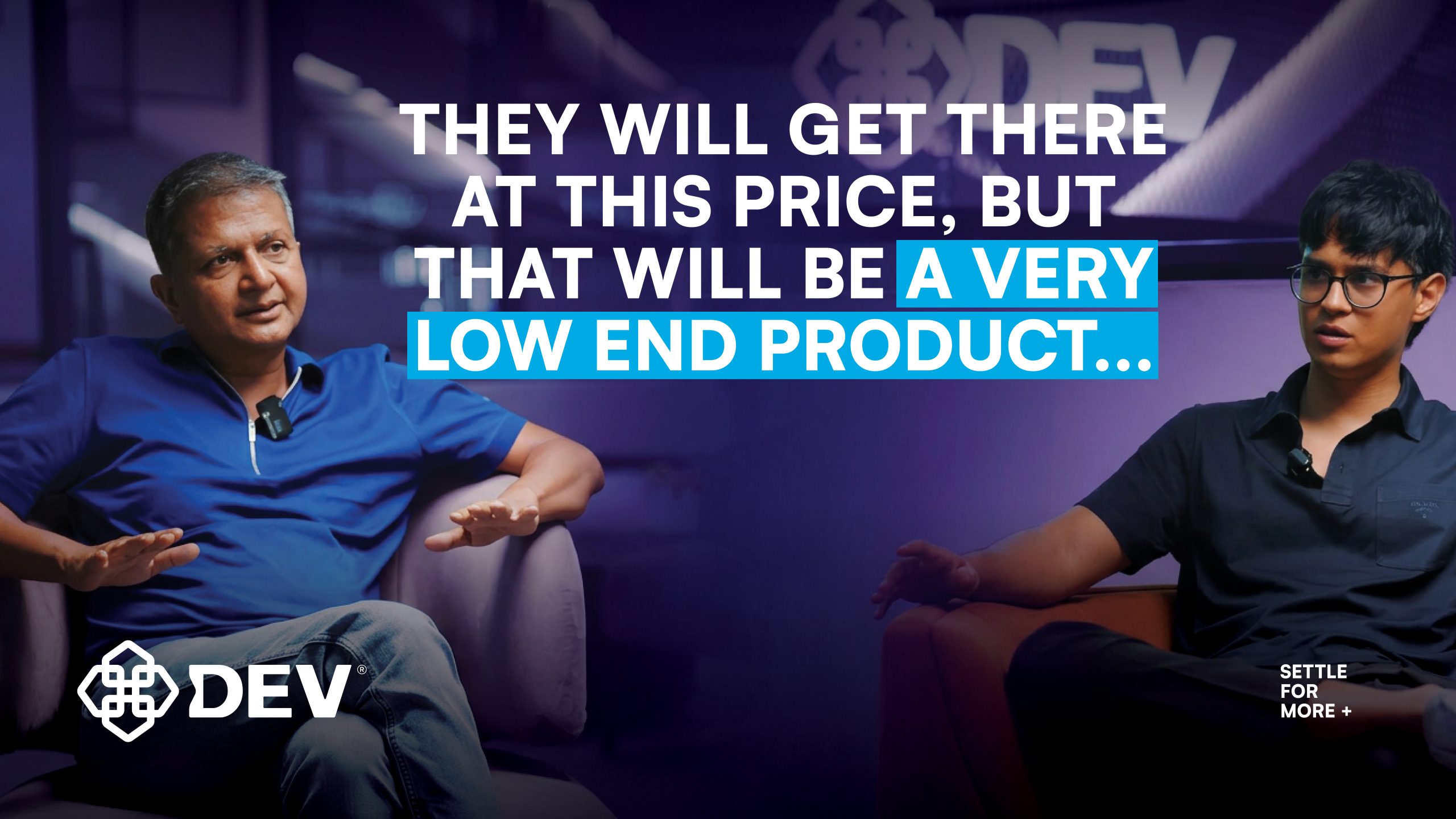
They may get a product at the same price, but it could be a very low-end product where there are no corner flats and no high-end specifications.
It is already overpriced.
It is congested.
There are no transportation links.
So I suggest that, from a practical point of view, considering all this connectivity, transportation infrastructure, and demand creation, buyers should think carefully.
Even if you don’t intend to sell, you should buy in a location where you feel that in 3 to 5 years the value has the potential to double.
Land prices have already doubled.
Inflationary pressure is very high.
Connectivity, transportation, and demand are all being created.
So that is the kind of market you should enter.
Devansh Bansal:
I have a lot of people coming to me every day saying that the market is down and the market is not doing well.
What would you say to that?
We are in touch with a lot of developers through CREDAI as well.
Even publicly issued statements indicate that GCCs are occupying office spaces aggressively.
So is the market really not doing well?
What would you say?
Sanjay Bansal:
The way I would respond to this is that I don’t know whether you are aware or not, but I am a student of economics. I have a B.A. in Economics.
In economics, we have something called the multiplier effect.
When the market is good—whether due to state-level factors, country-level factors, or international factors—the multiplier effect comes into play.
If the actual demand in a micro market is 100 units, demand and supply activity may expand to 1,000 units.
When the market starts correcting for any reason, that 1,000 comes down to 200.
It comes much closer to actual demand.
But actual demand always remains.
I’ll give you a factual example that you can verify.
Last Sunday, I brought a senior IAS officer to this project, and we were having the same discussion.
He told me to check with AI what the registration collections have been quarter-on-quarter over the last one year and two years.
According to him, registrations are increasing, not decreasing.
And this is without increasing the guideline value.
The guideline value was increased only yesterday, on 5th June.
If registrations are increasing without an increase in guideline value, what does that indicate?
It means registrations themselves are increasing.
Now, the supply side is increasing as well, but that is a different discussion.
For real buyers—whether end users or investors—everyone will have their own reasons to buy or not buy.
But registrations are happening.
People can verify that through AI.
And they should choose the option that delivers the best value for money.
Devansh Bansal:
Understood, sir.
Noted.
Thank you so much.
Sanjay Bansal:
Thanks.